


Place of Publication
Phytokeys 270: 105 (2026)
Type citation
Chile, Región del Libertador General Bernardo O’Higgins: Provincia de Cachapoal, Comuna de San Vicente de Tagua Tagua, cerro La Sepultura, Roblería de Rinconada, 1150 m a.s.l., 18 August 2023, N. García, C.B. Ulloa, M.M. Espinoza. M.A. González, J.A. Hernández & R.A. Alarcón 6800 (holotype: EIF 18605; isotypes: CONC, SGO).
Common names
- cometa de La Sepultura, (García et al (2026))
References
-
García et al (2026)
García, N. , Zúñiga-Acevedo, P. , González, M.A. , Espinoza, M.M. , Soto, C. and Cisternas-Gallardo, B.J. 2026. Taxonomic novelties and phylogenetic insights on Gilliesieae (Allioideae, Amaryllidaceae) from Chile. PhytoKeys 270: 93–117.
Habitat
Mediterranean and Mountain matorral & sclerophyllous forest
Distribution and habitat
Gilliesia reflexa has been recorded only at the top of La Sepultura hill that lies between the Cachapoal and Tinguiririca rivers.Here it grows in the understory of two small fragments of relictual forest dominated by Nothofagus obliqua, along with N. glauca, Quillaja saponaria, Azara petiolaris and Aristotelia chilensis. Both forest fragments are located on south- to southeast-facing slopes at 1050–1150 m a.s.l.
Conservation status
- Critically Endangered B2ab(iii), (García et al (2026))
Habit
Perennial herb 19 to 35 cm tall. Flowers from August toSeptember. The fruiting period has been recorded during October.
Key characteristics
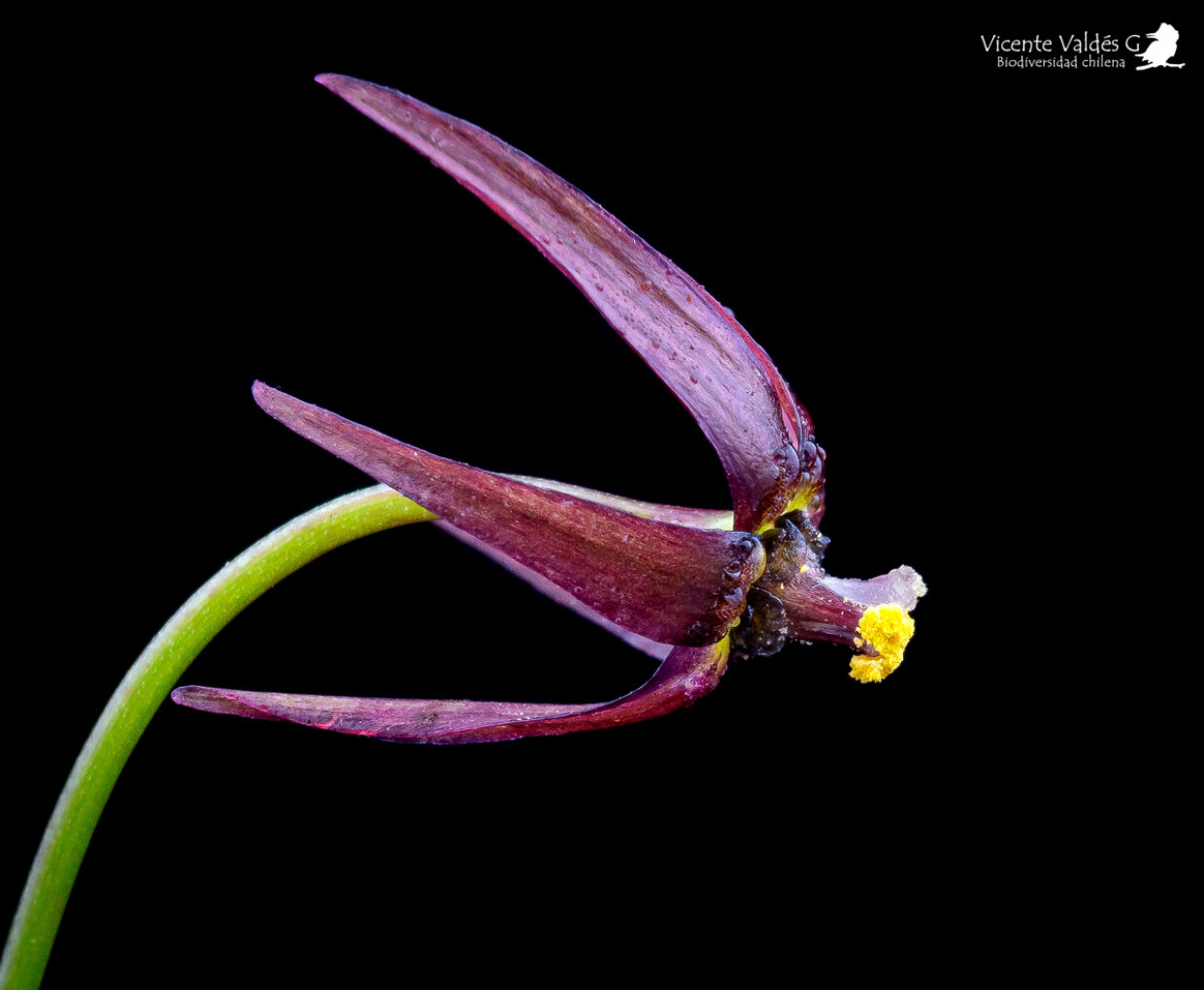
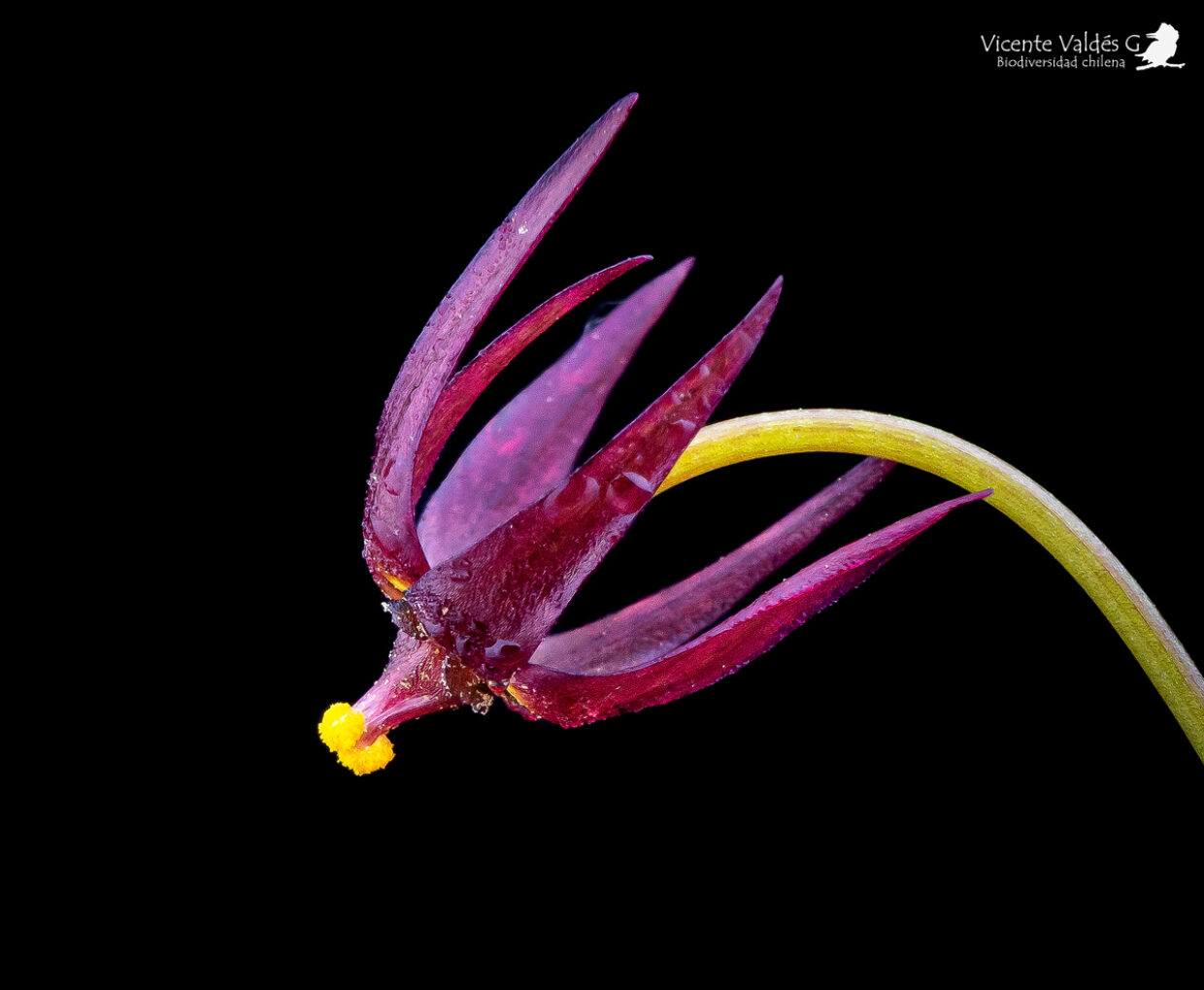
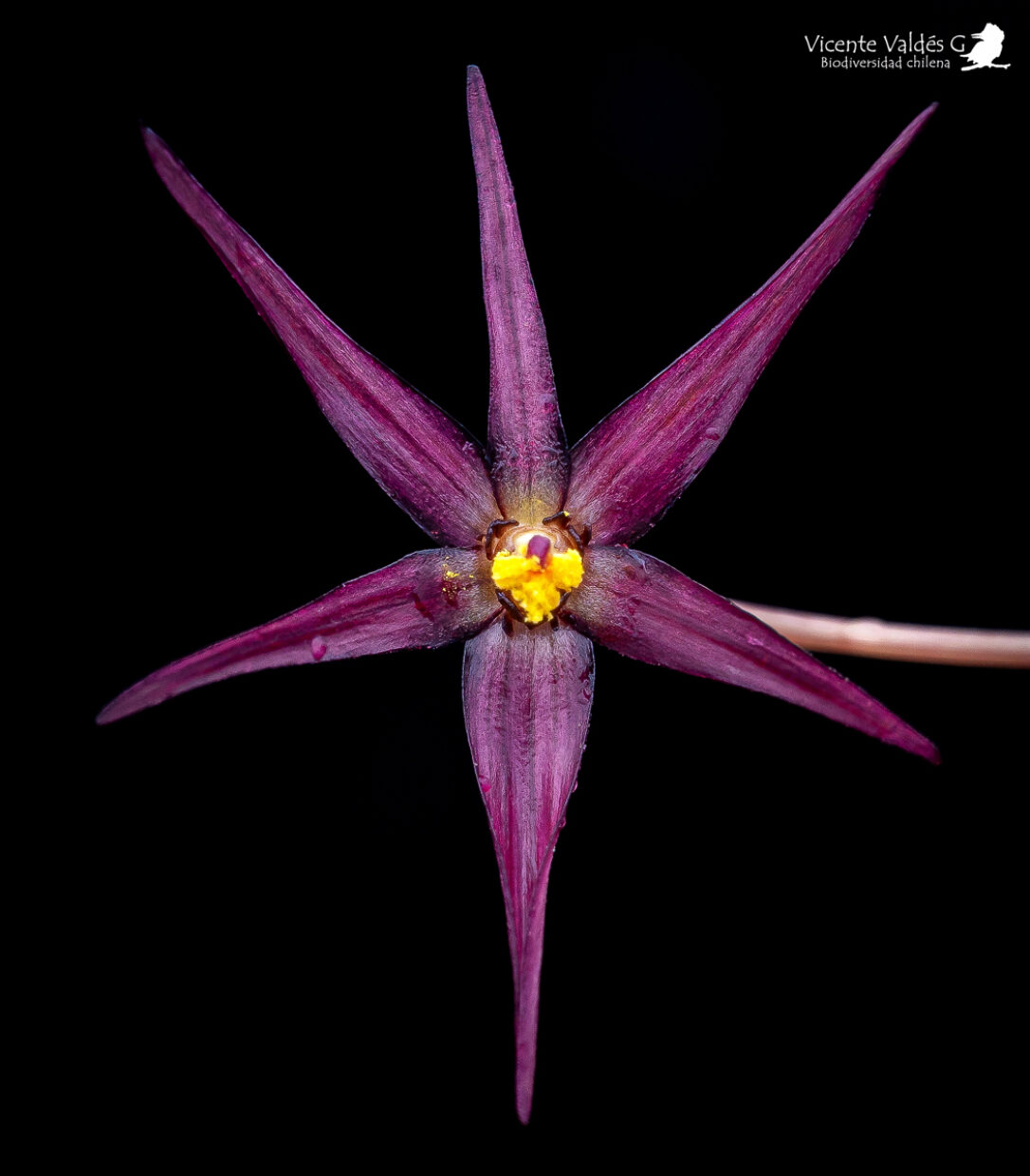
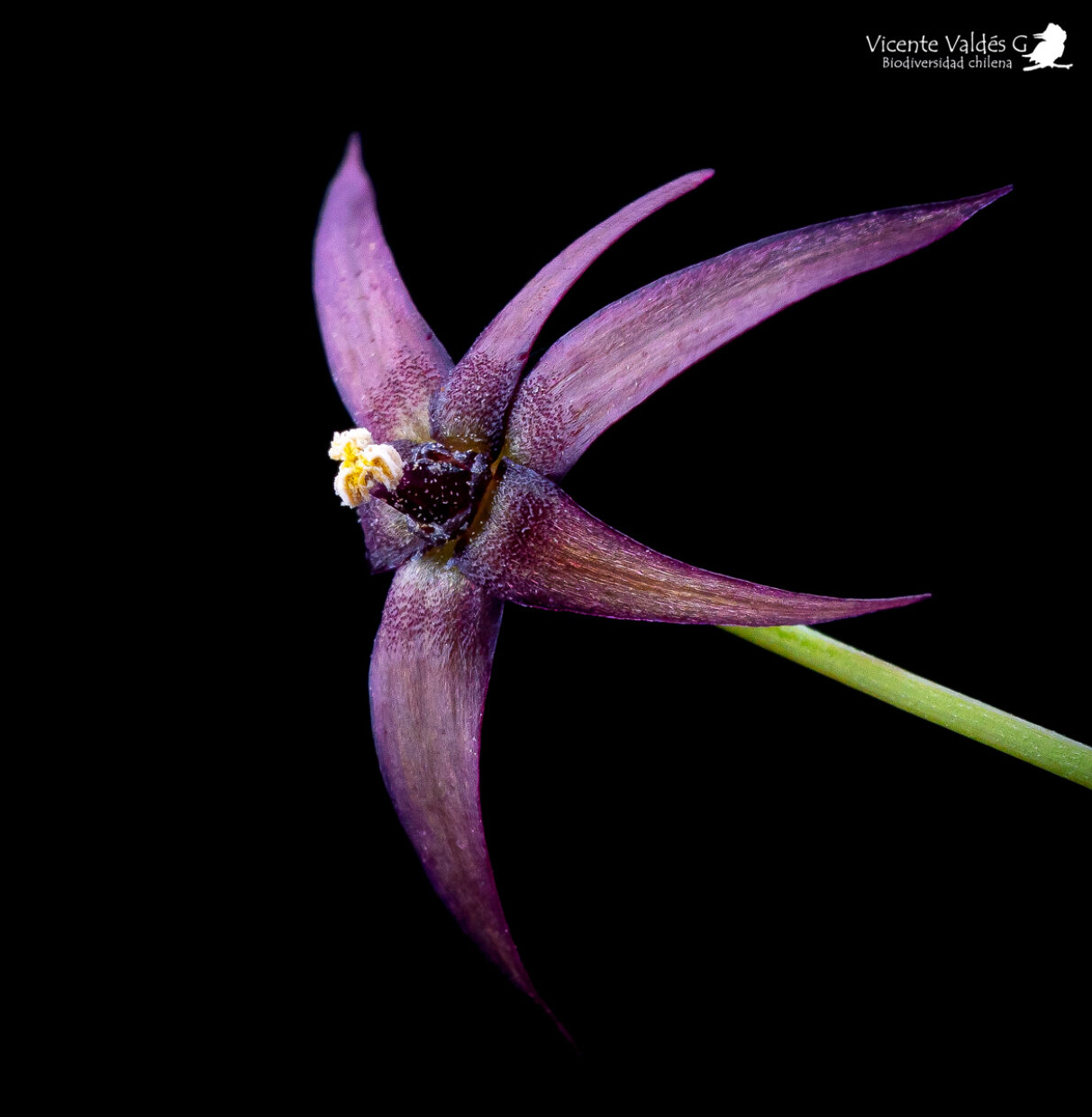
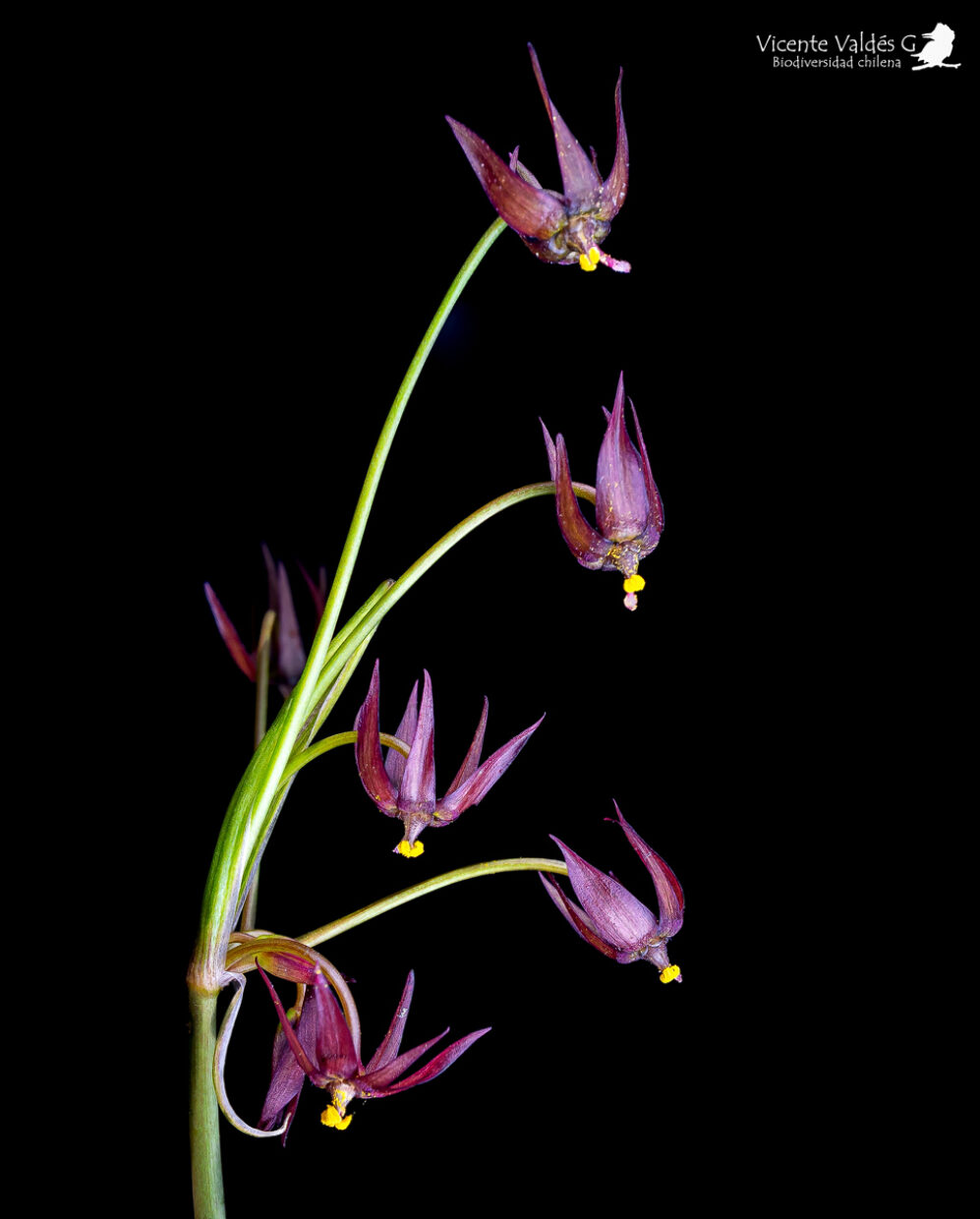
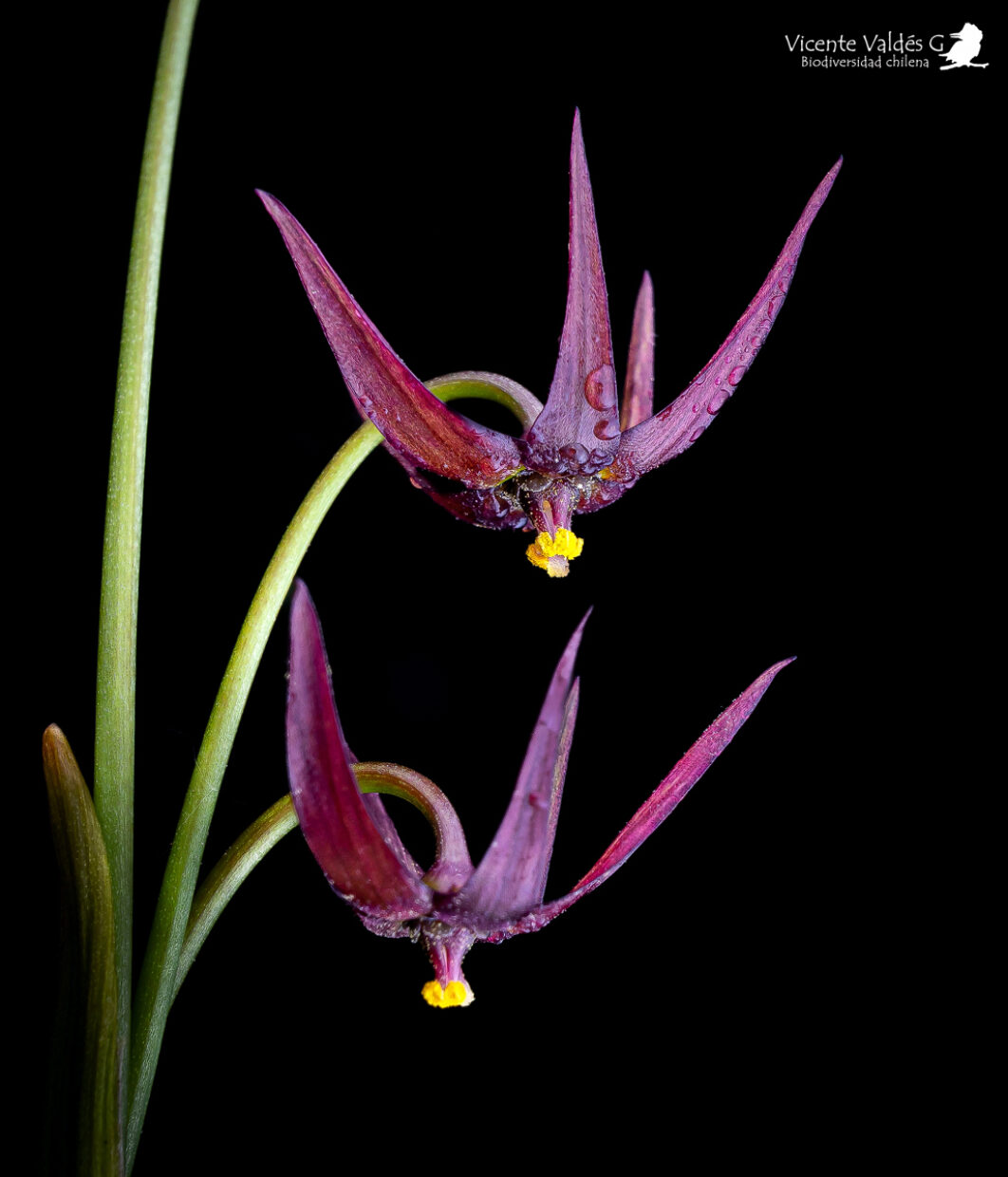
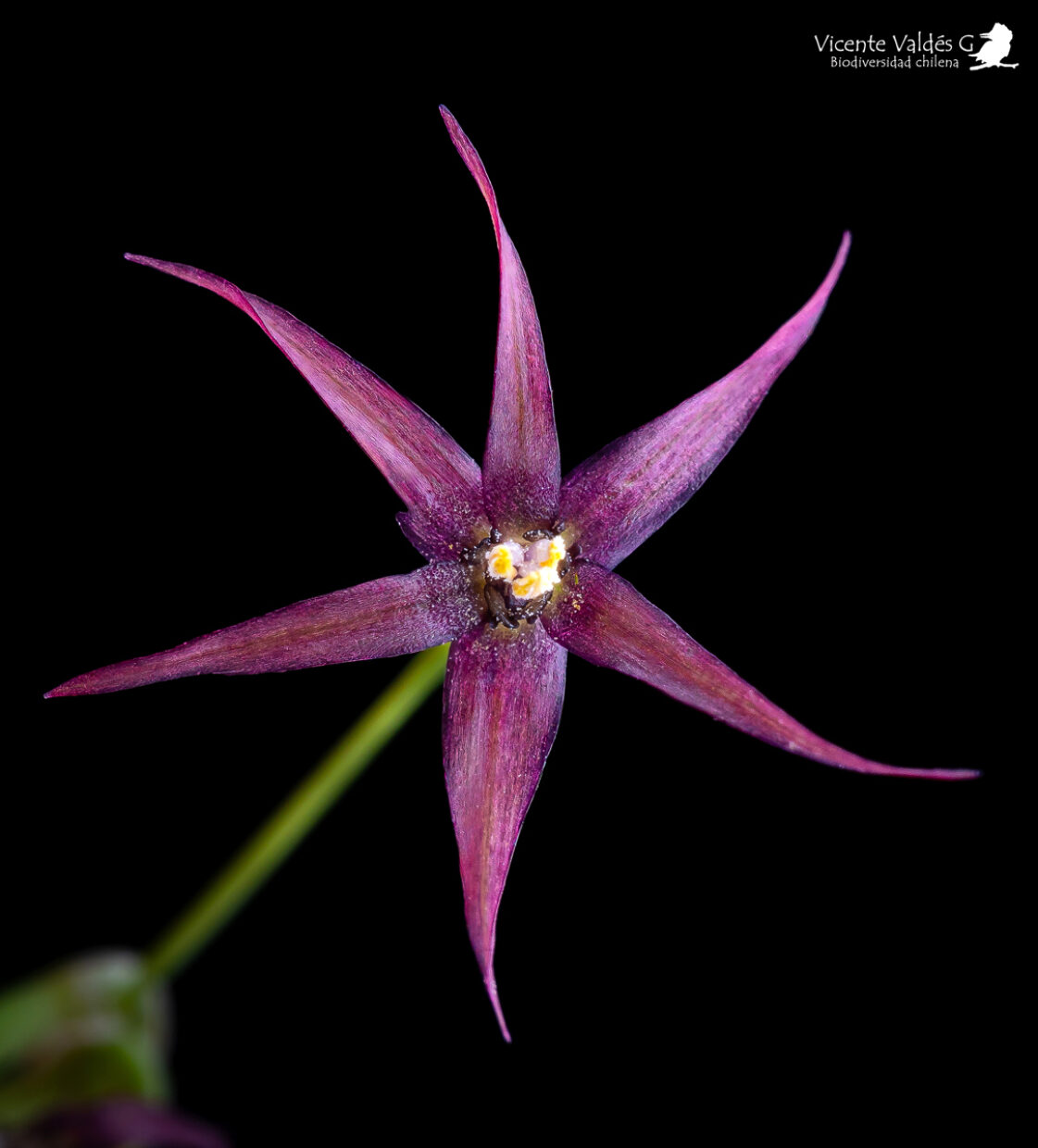
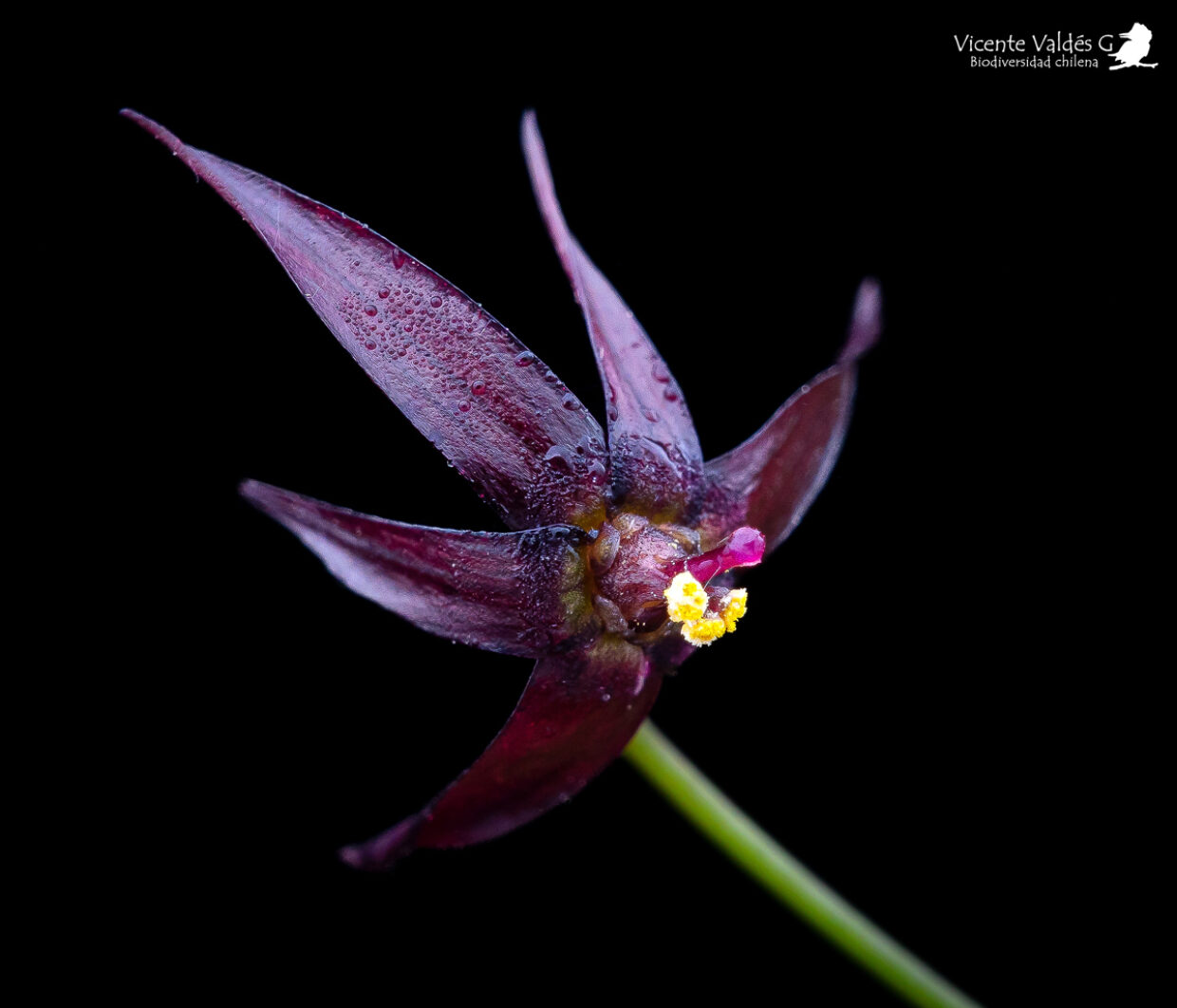
Gilliesia reflexa differs from Gilliesia atropurpurea by its shorter tepals, 6–10 mm long (vs. (9–)12–25 mm long), and tepals usually strongly reflexed from the base (vs. usually straight or reflexed at tips, sometimes inner tepals reflexed from base), [García et al (2026)]